


Evaluating Optical Precision in PVC Ceiling Films
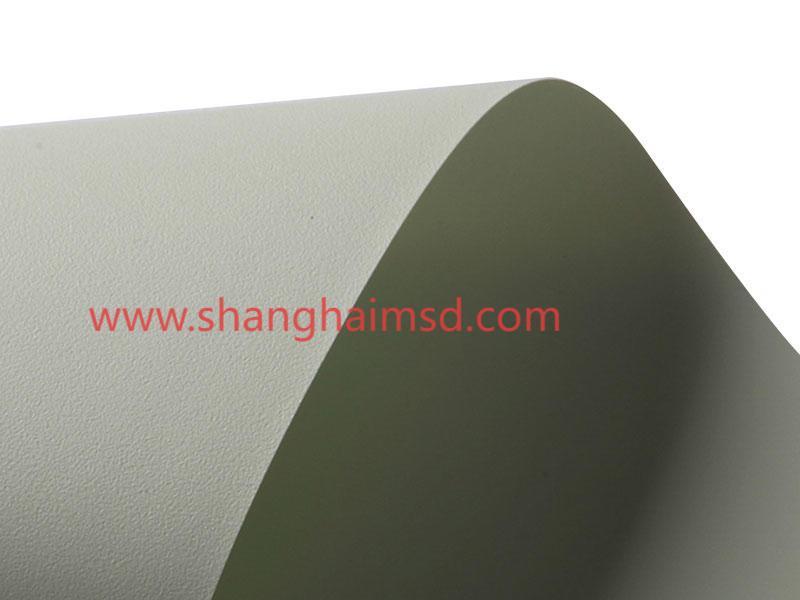
Interior material engineering has shifted toward membrane-based ceiling systems where flexibility, visual precision, and environmental stability must coexist in one material solution, which is why many architects specify PVC Ceiling Film during early design planning stages for commercial and residential installations. Companies like Shanghai MSD International Trade Co., Ltd. support this adoption by producing ceiling-grade membranes calibrated for optical consistency, long-term reliability, and strict architectural requirements.
The polymer formulation behind ceiling-grade PVC film determines much of its behavior under installation tension and environmental exposure. The base vinyl chloride polymer is combined with impact modifiers, aging inhibitors, and controlled levels of plasticizers to produce a material that remains stable under stretching while retaining a smooth, low-defect surface. Additives must be distributed evenly to prevent zones of weakness, which would otherwise create micro-wrinkles or uneven reflectivity once the film is fitted into a suspended frame. The formulation also influences how the film responds to cleaning chemicals, temperature shifts, and mechanical loading over time.
Manufacturing begins with precision-controlled compounding where raw polymers and additives are blended into a uniform melt. During extrusion, melt temperature and pressure are continuously monitored to maintain clarity and prevent internal haze formation. Any irregularity at this stage can distort how the film interacts with ceiling-mounted lighting systems. Following extrusion, the material passes through calendaring rollers that set surface texture, thickness, and gloss level. Roller alignment and thermal balance are essential—slight inconsistencies can produce visible streaking or cause optical distortions in glossy ceiling applications.
After calendaring, many ceiling films undergo a controlled stretching process that increases tensile strength and enhances dimensional stability. This stretching reorients the polymer chains, helping the film withstand long-term tension without sagging. Some variations incorporate micro-embossing treatments to create specific visual effects, improve light diffusion, or enhance acoustic performance. Surface coatings may also be applied to increase resistance to cleaning agents or to support advanced printing for decorative ceilings in retail, exhibition, or lounge environments.
Applications for PVC ceiling membranes span a wide range of interior spaces. In hospitality projects, high-gloss versions are used to amplify lighting and create reflective depth that enlarges spatial perception. In wellness facilities, matte and satin films offer soft light diffusion suited for calming environments. The material’s lightweight nature helps contractors install large ceiling spans with minimal structural load, a key advantage for renovations where heavy building materials are impractical. Shanghai MSD frequently introduces customized ceiling solutions tailored to the brightness, humidity, and acoustic requirements of international customers.
Performance testing is essential to verify the ceiling film’s ability to withstand long-term architectural demands. Tensile and elongation tests confirm whether the material can handle stretching during installation without tearing. Heat aging tests examine changes in elasticity and surface smoothness after prolonged exposure to warm air generated by HVAC systems or ceiling-mounted lights. Humidity resistance tests measure the film’s stability in environments such as indoor pools or spas, ensuring it will not warp or bubble under sustained moisture levels.
Flame retardancy evaluations assess material behavior under controlled ignition, including flame spread rate and smoke release parameters that determine its suitability for public buildings. Optical uniformity testing checks for distortion, gloss inconsistency, and color deviation across the film’s width—crucial when large ceiling panels must appear visually seamless. Cleaning resistance tests verify compatibility with detergents used in commercial facilities, preventing surface dulling or micro-cracking caused by repetitive maintenance cycles.
Light performance assessments are particularly important for modern architectural interiors. Gloss measurement instruments determine how well the film interacts with directional or diffused lighting. Reflective films must maintain high clarity without hotspots or irregular reflection. Diffusive films, by contrast, are tested for even light spread to ensure soft, shadow-free illumination. These evaluations guide designers in selecting the proper ceiling finish for lobbies, showrooms, restaurants, or entertainment venues.
Indoor air quality testing is also applied to ceiling film materials to ensure compliance with global standards for low volatile compound emissions. This testing verifies that the material remains suitable for enclosed environments over long use durations. Dimensional stability tests further ensure that seasonal temperature variations will not cause contraction lines or surface tension imbalance in large ceiling installations.
As architectural requirements become more specialized, PVC ceiling membranes offer broad adaptability across aesthetic, structural, and functional criteria. Shanghai MSD International Trade Co., Ltd. continues to provide advanced ceiling film options designed for global clients seeking predictable performance across diverse climate and design contexts. Additional details on ceiling film solutions are available at https://www.shanghaimsd.com/ .

 English
 Arabic
 French
 Spanish
 Portuguese
 Deutsch
 Dutch
Dutch
 Italiano
 Russian
 Romaian
 Portuguese (Brazil)
 Greek
Greek